


Newsletter Subscribe
Enter your email address below and subscribe to our newsletter

Ideas Worth Building

The White House Arcade section on WhiteHouse.gov features five low-resolution games tied to Trump administration themes, including border security, school lunches, and children’s savings accounts.
The White House has added an unusual new feature to its official website: a small online arcade with low-resolution video games connected to President Donald Trump’s policy agenda.
The section, called the White House Arcade, gives visitors a set of simple browser games built around themes such as border security, school lunches, children’s savings accounts, and federal spending. The Washington Times reported that the White House website debuted the arcade collection on Thursday, Sept. 3, with five games available.
For readers new to this story, the important point is not that the games are technically advanced. They are not presented as major commercial releases. The news is that an official government website is using game-style digital media as a form of public messaging and political branding.
The White House Arcade is hosted on WhiteHouse.gov at [whitehouse.gov/arcade](https://www.whitehouse.gov/arcade/). The page currently points visitors to five playable games, along with a “Coming Soon” teaser for another future entry.
Each game uses simple arcade mechanics to promote or reference a specific Trump administration theme. That makes the project part of a broader trend often called gamified politics, where campaigns, public institutions, or advocacy groups use interactive media to communicate political messages.
The games are short, direct, and designed around recognizable policy slogans or administration priorities. Below is a guide to what is currently listed.

Direct link: [whitehouse.gov/arcade/flappy-bill](https://www.whitehouse.gov/arcade/flappy-bill/)
“Flappy Bill” appears to borrow the basic idea of a tap-to-fly obstacle game. The White House description says players “fly the eagle down the National Mall.”
The game’s title and eagle imagery connect it to federal spending and national symbols. As a piece of public messaging, it uses familiar arcade movement to place the player inside a patriotic visual setting rather than explaining a policy in long-form text.
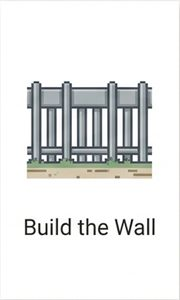
Direct link: [whitehouse.gov/arcade/build-the-wall](https://www.whitehouse.gov/arcade/build-the-wall/)
“Build the Wall” is one of the clearest examples of the arcade section connecting directly to a Trump agenda item. The page describes the game as one where players “protect the border from the coming horde.”
The policy theme is border security, a central Trump political brand since his first presidential campaign. The phrasing on the page is direct and may draw scrutiny because it frames immigration enforcement through an arcade-defense premise.
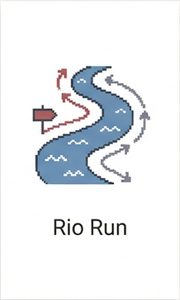
Direct link: [whitehouse.gov/arcade/rio-run](https://www.whitehouse.gov/arcade/rio-run/)
“Rio Run” also centers on the border. The supplied description identifies it as a Border Patrol game along the Rio Grande.
Like “Build the Wall,” this game uses border enforcement as its message. The difference is in the implied gameplay: rather than building or defending a wall, the player is placed into a patrol-style scenario. It is another example of the White House turning a policy area into an interactive, simplified challenge.
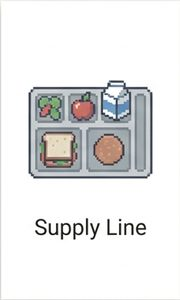
Direct link: [whitehouse.gov/arcade/supply-line](https://www.whitehouse.gov/arcade/supply-line/)
“Supply Line” moves away from immigration and into health and nutrition messaging. The White House description says players sort school lunches to “Make America Healthy Again.”
That phrase echoes Trump-era slogan language while tying the game to school food and health policy themes. The gameplay appears to use sorting as the central mechanic, making it easy for beginners to understand even without a gaming background.
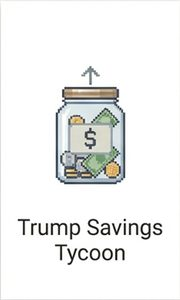
Direct link: [whitehouse.gov/arcade/trump-savings-tycoon](https://www.whitehouse.gov/arcade/trump-savings-tycoon/)
“Trump Savings Tycoon” focuses on children’s savings accounts. The page describes the goal as filling “your kid’s Trump Accounts.”
The term “tycoon” is often used in management-style games where players build, collect, or grow resources over time. Here, that format is attached to a financial policy message aimed at families and children’s accounts.

The main arcade page also includes a “Coming Soon” area, with language indicating that a new adventure is on the way and visitors should stay tuned.
No additional title, release date, or gameplay details were included in the available source material. Until the White House posts more information, the next game should be treated as announced only in teaser form.
Government websites usually focus on press releases, policy fact sheets, executive actions, and public service information. The White House Arcade is different because it turns policy themes into quick interactive experiences.
That does not automatically make the games persuasive or effective. But it does show how official public messaging is adapting to internet culture. Low-resolution video games are easy to share, easy to understand, and familiar to people who grew up with mobile and browser-based games.
For supporters, the games may function as a playful way to reinforce the Donald Trump agenda. For critics, the same format may raise questions about whether official government resources should be used for political promotion. Any stronger characterization, including terms such as propaganda, should be attributed to named critics or experts rather than stated as fact.
Readers can view the main White House Arcade page at [whitehouse.gov/arcade](https://www.whitehouse.gov/arcade/). The five current game pages are also available directly through the links above.
Because this is a live government website, details may change after publication. Readers who want the latest version should check the official White House Arcade page directly.
Read more from the original report at The Washington Times and compare it with the live WhiteHouse.gov pages for the most current information.