


Newsletter Subscribe
Enter your email address below and subscribe to our newsletter

Ideas Worth Building
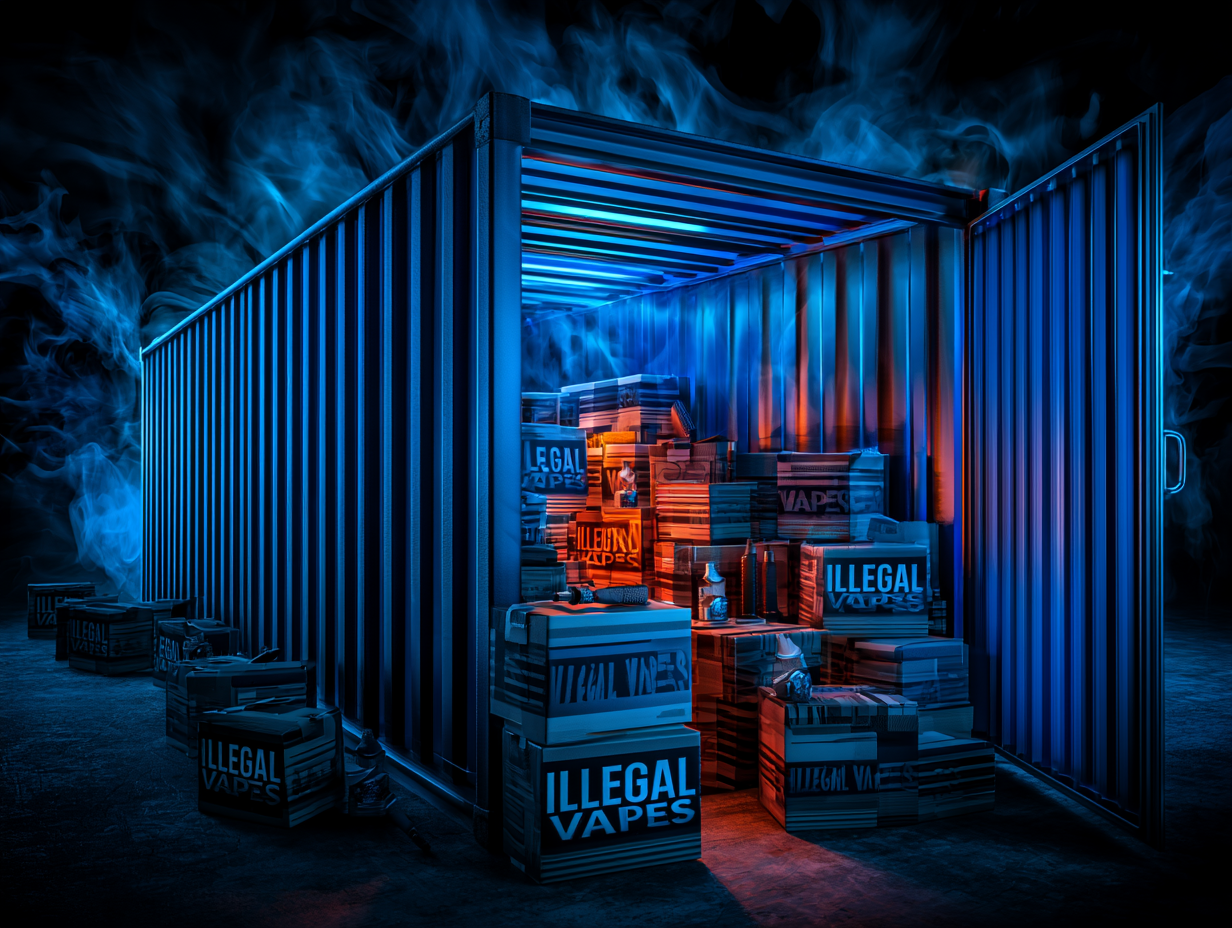
Former Rep. Chris Stewart’s warning about illegal Chinese-made disposable vapes highlights a larger U.S. enforcement challenge involving imports, youth vaping, retailer compliance, and consumer safety.

Former Rep. Chris Stewart’s warning about America’s illegal vape problem lands at a difficult moment for regulators, retailers, parents, and manufacturers. The U.S. market is awash in disposable vaping products that often appear faster than enforcement agencies can inspect, test, block, or remove them.
That does not mean every imported vape is unlawful. It also does not justify broad anti-China rhetoric. The issue is more specific and more consequential: unauthorized products, many of them Chinese-manufactured vapes, are entering U.S. commerce despite tobacco regulation that requires federal authorization before legal marketing.
This is where Stewart’s argument deserves serious attention. If enforcement continues to lag behind product turnover, online sales, and gray-market distribution, the consequences will not be limited to regulatory paperwork. The effects will show up in youth vaping prevention, retailer compliance risk, consumer safety, and the credibility of federal tobacco policy itself.

The phrase “illegal vapes” can be imprecise, but in the U.S. context it generally refers to vaping products that are being sold without authorization from the Food and Drug Administration. Under the FDA’s tobacco product framework, new tobacco products, including e-cigarettes and disposable vapes, must go through the premarket tobacco product application process before they can be legally marketed.
The FDA has authorized only a limited number of e-cigarette products through that process. Most flavored disposable products widely seen in stores and online have not received FDA marketing authorization. That matters because authorization is not supposed to be a symbolic step. It is the mechanism federal law uses to evaluate whether marketing a product is appropriate for the protection of public health.
From an enforcement perspective, however, the market has moved faster than the system. Disposable vapes can be manufactured, redesigned, rebranded, shipped, and distributed quickly. A product that attracts regulatory scrutiny can disappear from one channel and reappear under a slightly different name, flavor line, package design, or importer.
That speed makes the illegal disposable vapes market hard to police using slow, case-by-case enforcement alone.
Many disposable vaping devices sold globally are manufactured in China, particularly in and around major electronics manufacturing hubs. That manufacturing origin is relevant because vape import regulations, customs screening, and supply-chain documentation are central to enforcement.
But the China connection should be analyzed carefully. The problem is not that a product is Chinese-made. The problem is that unauthorized products can move through import channels, distribution networks, online marketplaces, and retail shelves without sufficient accountability.

A serious policy response should focus on product legality, documentation, safety, and compliance. It should not treat national origin as a substitute for evidence.
That distinction is important for three reasons:
1. Legitimate companies also rely on international manufacturing.
2. Enforcement decisions must be grounded in U.S. law, not political slogans.
3. Broad rhetoric can distract from the practical failures that allow unauthorized products to reach consumers.
The central question is not whether a device was made in China. The central question is whether it is authorized, accurately labeled, properly imported, and sold through compliant channels.
Public health concerns are the strongest reason this issue remains politically urgent. According to CDC and National Youth Tobacco Survey reporting, e-cigarettes have remained the most commonly used tobacco product among U.S. middle and high school students in recent years. Disposable devices and flavored products have played a major role in youth appeal, even as overall youth vaping trends have fluctuated.
This is one of the core tensions in vaping policy. Adult smokers may seek alternatives to combustible cigarettes, and some advocates argue that properly regulated vaping products can play a harm-reduction role. At the same time, youth nicotine use creates well-documented public health concerns, particularly when products are sweet-flavored, inexpensive, easy to conceal, and widely available.
Unauthorized disposable vapes intensify that tension. They make it harder for regulators to distinguish between a controlled adult market and a youth-access problem. They also undermine any policy framework built around age verification, product review, labeling standards, and marketing restrictions.
If federal agencies cannot keep unauthorized products out of the market, youth prevention campaigns become less effective. Schools and parents are left responding to products that may not have gone through meaningful U.S. review.

The illegal vape problem is also a business problem.
Retailers that try to follow tobacco regulation face a complicated compliance environment. They must monitor FDA enforcement updates, confirm supplier claims, manage age-verification obligations, and avoid selling products that could trigger warning letters, seizures, fines, or other penalties.
At the same time, retailers that ignore the rules may be able to offer high-demand flavored disposables at attractive margins. That creates an uneven playing field. A compliant shop may lose customers to a nearby seller carrying unauthorized products. A legitimate manufacturer that invests in regulatory review may compete against products that bypass the same costs.
This is why the issue cannot be reduced to public health alone. Weak enforcement rewards noncompliance. It pushes responsible operators into a market where following the rules can become a competitive disadvantage.
For the smoke shop and convenience retail sectors, the risk is not theoretical. FDA enforcement actions have included warning letters and civil money penalty complaints against retailers accused of selling unauthorized e-cigarette products. The agency has also worked with Customs and Border Protection on import enforcement against unauthorized vaping products.
The message is clear: retailers cannot rely only on popularity, packaging, or distributor assurances. They need to treat product legality as a core compliance issue.
Stewart’s call for faster action naturally points to the border. If unauthorized vapes are imported, then stronger border enforcement should be part of the response.
CBP and FDA coordination is essential. Import screening, shipment holds, product sampling, documentation review, and targeted seizures can prevent unlawful products from reaching wholesalers and retailers. These tools are especially important when products arrive in large volumes or through repeat importers.
But border enforcement has limits.
Vape products can be shipped under incomplete or misleading descriptions. Importers may change names or logistics routes. Shipments can be split across ports, carriers, or intermediaries. Online sellers may use direct-to-consumer fulfillment models that are harder to detect than traditional wholesale import channels.
That means a border-only strategy will always be incomplete. Once products enter domestic distribution, enforcement must also reach warehouses, distributors, online platforms, payment systems, and retail shelves.
A faster U.S. response should not mean random crackdowns. It should mean a more coordinated enforcement chain from port of entry to point of sale.
Calls for tougher enforcement are common. The harder question is what enforcement should prioritize.
A practical approach would include several layers:
The FDA should continue clarifying which products and behaviors receive the highest enforcement priority. Flavored disposable products with youth appeal, products with misleading labeling, repeat violators, and importers linked to unauthorized shipments should be obvious priorities.
Clarity matters because retailers and distributors need actionable guidance. If the marketplace is confusing, bad actors benefit.
Importers should be expected to provide reliable product identification, manufacturer information, authorization status, and accurate tariff and shipment documentation. Vape import regulations are only effective if agencies can quickly determine what is entering the country and whether it can be legally marketed.
FDA, CBP, the Federal Trade Commission, state attorneys general, and local enforcement bodies all see different parts of the market. Better data sharing could help identify repeat offenders, suspicious import patterns, and retailers selling products already flagged by federal agencies.
Retail penalties have a role, especially for repeat violations. But enforcement should also help retailers identify unauthorized products before they are placed on shelves. Public databases, clearer product status tools, and updated enforcement lists could reduce confusion.
Unauthorized disposable vapes are not only a brick-and-mortar issue. Online sales, social media promotion, and marketplace listings can move products quickly and make age controls difficult to verify. Platforms that facilitate sales or advertising should face clearer expectations.
Consumer safety is often overshadowed by youth-access debates. Unauthorized products may raise questions about nicotine concentration, labeling accuracy, battery safety, contaminants, and quality control. Product testing should be part of enforcement, especially for products with unclear manufacturing records or suspicious claims.
The illegal vape market exposes a larger problem in tobacco regulation: the review and enforcement systems are operating in a market built for rapid iteration.
Traditional tobacco products changed slowly. Disposable vapes change quickly. A new flavor, device shape, nicotine formulation, or brand name can appear almost overnight. That makes it difficult for a federal review system to keep pace.
This does not mean the FDA should abandon the process. It means enforcement has to be more adaptive. If regulatory review is slow and enforcement is inconsistent, the market will be shaped by the fastest and least compliant actors.
A credible system must do two things at once: preserve a lawful pathway for products that meet the public health standard, and remove unauthorized products that bypass the rules.
Legitimate manufacturers are also harmed when illegal vapes dominate shelf space. Companies that invest in applications, testing, legal review, age-gated marketing, and compliant distribution face higher costs than companies that ignore those burdens.
That creates a distorted market. The businesses most willing to follow tobacco regulation may become less competitive than those willing to exploit enforcement gaps.
For policymakers, this matters. A regulatory regime that punishes compliance indirectly encourages evasion. If the U.S. wants a controlled nicotine market, it must make lawful conduct viable and unlawful conduct costly.
There is a risk that the illegal vape debate becomes polarized between two oversimplified positions: ban everything or enforce nothing. Neither is a serious policy.
A more balanced approach would recognize that vaping policy must address several goals at once:
– Prevent youth nicotine use.
– Protect consumers from unreviewed or unsafe products.
– Give compliant retailers clear rules.
– Support legitimate manufacturers that follow the law.
– Strengthen border enforcement without relying on broad national-origin assumptions.
– Keep enforcement focused on products and conduct, not political generalizations.
That is the useful part of Stewart’s warning. The U.S. response does appear too slow for the speed of the disposable vape market. But speed alone is not enough. Enforcement must be targeted, transparent, and legally durable.
America’s illegal vape problem is not just a vaping issue. It is a test of whether consumer product oversight can keep up with globalized manufacturing, online distribution, and fast-moving retail demand.
The country does not need louder rhetoric. It needs faster identification of unauthorized products, stronger import controls, meaningful retailer and platform accountability, and clearer FDA enforcement priorities.
If regulators move too slowly, illegal vapes will continue to undercut public health policy, compliant retailers, and legitimate manufacturers. If they move carelessly, they risk creating confusion without reducing youth access or improving consumer safety.
The better path is focused enforcement: faster, smarter, and grounded in evidence.
Read More: Follow our continuing coverage of vaping regulation analysis, consumer product safety, border enforcement and trade policy, public health policy, retail compliance risks, and FDA enforcement updates.
Opinion: We need to fix America’s illegal vape problem By Chris Stewart