


Newsletter Subscribe
Enter your email address below and subscribe to our newsletter

Ideas Worth Building
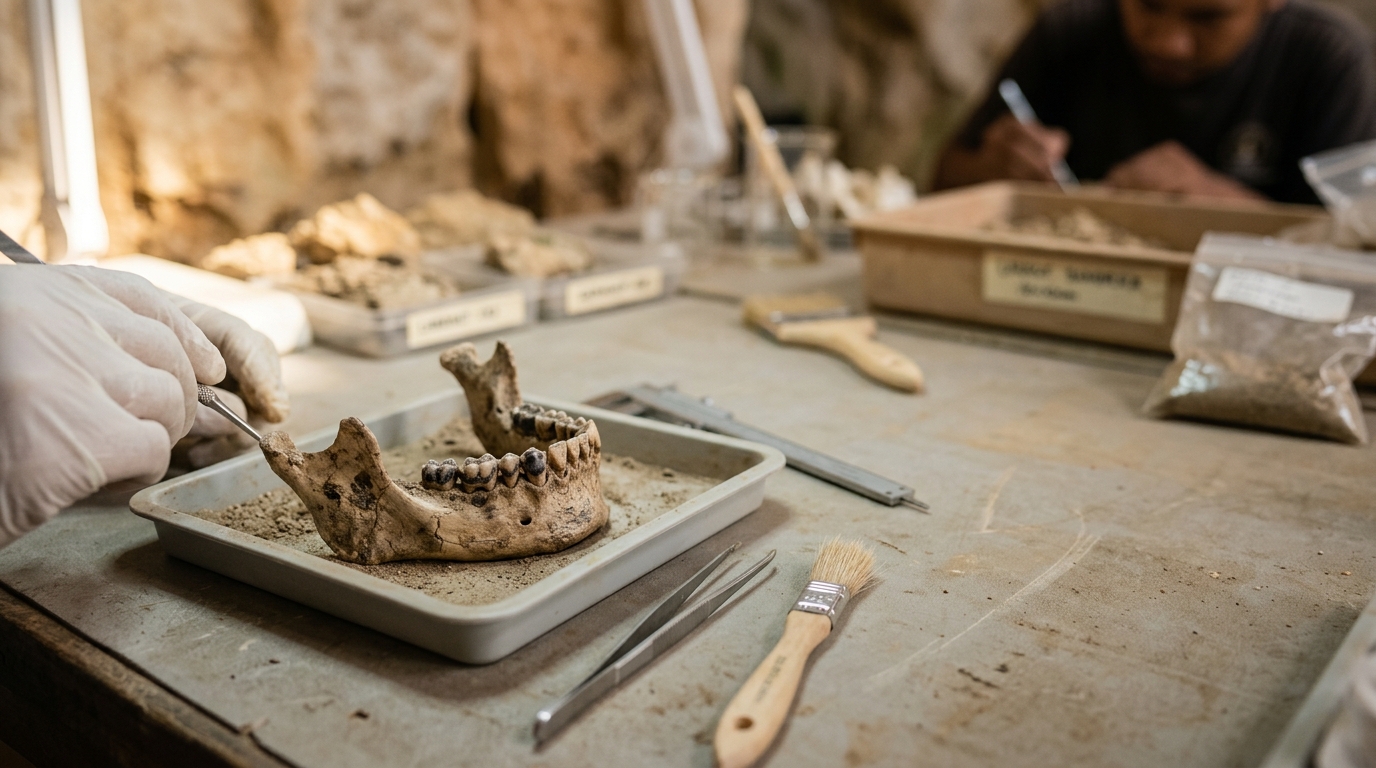
Dental remains from Indonesia may suggest psychoactive substance use as far back as 25,000 years ago, offering a rare clue to prehistoric human behavior while raising important questions about interpretation and evidence.
A set of ancient dental remains from Indonesia may push the story of ancient drug use much deeper into the human past.
According to a report from the New York Post, researchers studying roughly 25,000-year-old human remains have found evidence that may point to the use of psychoactive substances by prehistoric humans. If confirmed through the underlying research, the finding would be significant because it suggests that mind-altering plants or compounds may have played a role in human behavior long before written records, organized states, or the ritual traditions documented by later civilizations.
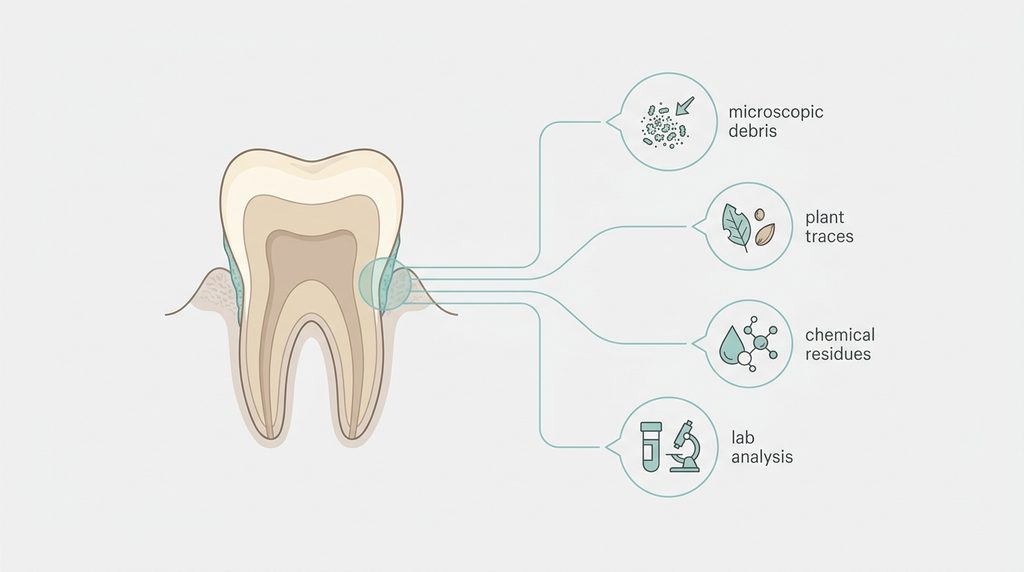
The claim is especially attention-grabbing because it comes from teeth. Dental remains can preserve traces of ancient lives in ways that bones and artifacts sometimes cannot. Microscopic debris, chemical residues, plaque that hardened into dental calculus, and wear patterns can all offer clues about diet, health, environment, and behavior.
In this case, the reported evidence has been framed as possible early use of hallucinogens or other psychoactive substances. That does not mean researchers have proved prehistoric recreational drug use. It does mean that human teeth may be preserving a rare chemical or botanical signal from a period when direct evidence of everyday behavior is exceptionally hard to find.
Teeth are among the most durable parts of the human body. Long after soft tissues decay, dental enamel and mineralized plaque can remain intact. For archaeologists, that makes dental remains a valuable archive.
Dental calculus, in particular, can trap tiny particles from food, plants, smoke, medicines, and the surrounding environment. Once plaque mineralizes, it can preserve microscopic and chemical traces for thousands of years. Researchers can then use laboratory methods to look for plant microfossils, residues, proteins, or compounds that may indicate what a person consumed or handled.
This is why dental evidence has become increasingly important in studies of prehistoric humans. It can help researchers ask questions that would have been nearly impossible to answer from stone tools or bones alone:
– What plants were people eating or chewing?
– Were certain substances used for medicine, ritual, stimulation, or pain relief?
– Did prehistoric groups process plants in ways that left traces in the mouth?
– Can chemical evidence reveal behavior that did not leave obvious artifacts?
For ancient drug use, this kind of evidence is especially valuable because psychoactive substances often come from perishable plants. Leaves, seeds, resins, fungi, and prepared mixtures rarely survive in tropical or humid environments unless conditions are unusually favorable.
The proposed age of the Indonesian remains is what makes the discovery so notable. Evidence for psychoactive substances is known from many later archaeological contexts, including residues, ritual objects, pipes, containers, burial goods, and preserved plant remains. Much of that evidence comes from periods closer to agriculture, settled communities, or historically documented ritual practices.
A possible date of 25,000 years ago would place the behavior deep in the Pleistocene, when prehistoric humans were living as hunter-gatherers and adapting to dramatically different landscapes and climates. That would make the finding relevant not only to the history of drugs, but to broader questions about cognition, symbolism, medicine, and social life.
If prehistoric humans in Indonesia were using psychoactive substances at that time, several interpretations are possible. The substances may have been used medicinally, ritually, socially, or as part of plant knowledge passed through generations. They may also have been used for reasons that do not fit neatly into modern categories.
That distinction matters. Modern labels such as “drug use” or “hallucinogen use” can oversimplify ancient behavior. A plant compound that affects perception or mood might have been understood by a prehistoric community as medicine, ceremony, food, poison, pain relief, endurance aid, or something else entirely.
Indonesia is an especially important region for archaeology because it sits at the crossroads of major questions about human movement, adaptation, and island life. The region’s caves, islands, and tropical environments have produced evidence that helps researchers understand how prehistoric humans navigated coastlines, used marine resources, and survived in complex ecosystems.
That setting also matters for the study of plants. Tropical regions contain a vast range of botanical species, including plants with stimulant, medicinal, toxic, and psychoactive properties. But tropical climates are also difficult for preservation, which means direct archaeological evidence can be rare.
Dental remains may help bridge that gap. If plant compounds or microtraces can be reliably identified in ancient teeth, researchers may be able to reconstruct aspects of prehistoric plant use that would otherwise disappear from the archaeological record.
The most important caution is that this discovery should not be treated as definitive proof that “cavemen got high” in the modern sense. Public reports have described the remains as evidence of ancient hallucinogenic drug use, but the scientific interpretation depends on the details of the original study: what substances were identified, how they were detected, how contamination was ruled out, and whether the compounds clearly indicate intentional consumption.
Archaeological evidence often works by probability rather than certainty. A residue on dental remains may suggest exposure to a plant or compound, but researchers still have to determine whether that exposure came from deliberate use, diet, environmental contamination, burial conditions, or later handling.
The strongest case would require a clear chain of evidence, including secure dating, well-preserved dental material, identifiable compounds or plant traces, and methods that distinguish ancient residues from modern contamination. Without those details, the finding should be understood as suggestive rather than conclusive.
That does not make it unimportant. Suggestive evidence can still reshape research questions, especially when it opens a new window onto behavior that rarely fossilizes.
The broader archaeological record already shows that humans have used psychoactive substances for a very long time. Later societies left clearer evidence in the form of vessels, pipes, ritual objects, written references, preserved plants, and burial contexts. These finds have been used to study alcohol, stimulants, cannabis, tobacco, coca, opium, and other substances in different parts of the world.
What makes the Indonesian dental evidence different is the potential age and the type of material. Instead of a container or artifact, the clue may come directly from human remains. That makes it more personal, but also more difficult to interpret.
If the evidence holds up, it could suggest that prehistoric drug use was not limited to later agricultural or ceremonial societies. It may have roots in much older traditions of plant knowledge among hunter-gatherer communities.
The discovery is best understood as a careful clue rather than a final answer. It points toward the possibility that prehistoric humans interacted with psychoactive substances far earlier than many people might assume. It also highlights how much information can be hidden in dental remains, especially when new laboratory methods are applied to old archaeological questions.
For now, the responsible takeaway is that the Indonesian remains may provide evidence of psychoactive substance use around 25,000 years ago. That possibility is important because it connects chemistry, archaeology, cognition, medicine, and ritual behavior in the deep human past.
The next step is to examine the original research closely: the dating, the dental analysis, the identified substances, and the authors’ interpretation of what the evidence can support.
Readers interested in the technical details should read the research directly and compare it with the public reporting before drawing firm conclusions about ancient drug use.