


Newsletter Subscribe
Enter your email address below and subscribe to our newsletter

Ideas Worth Building
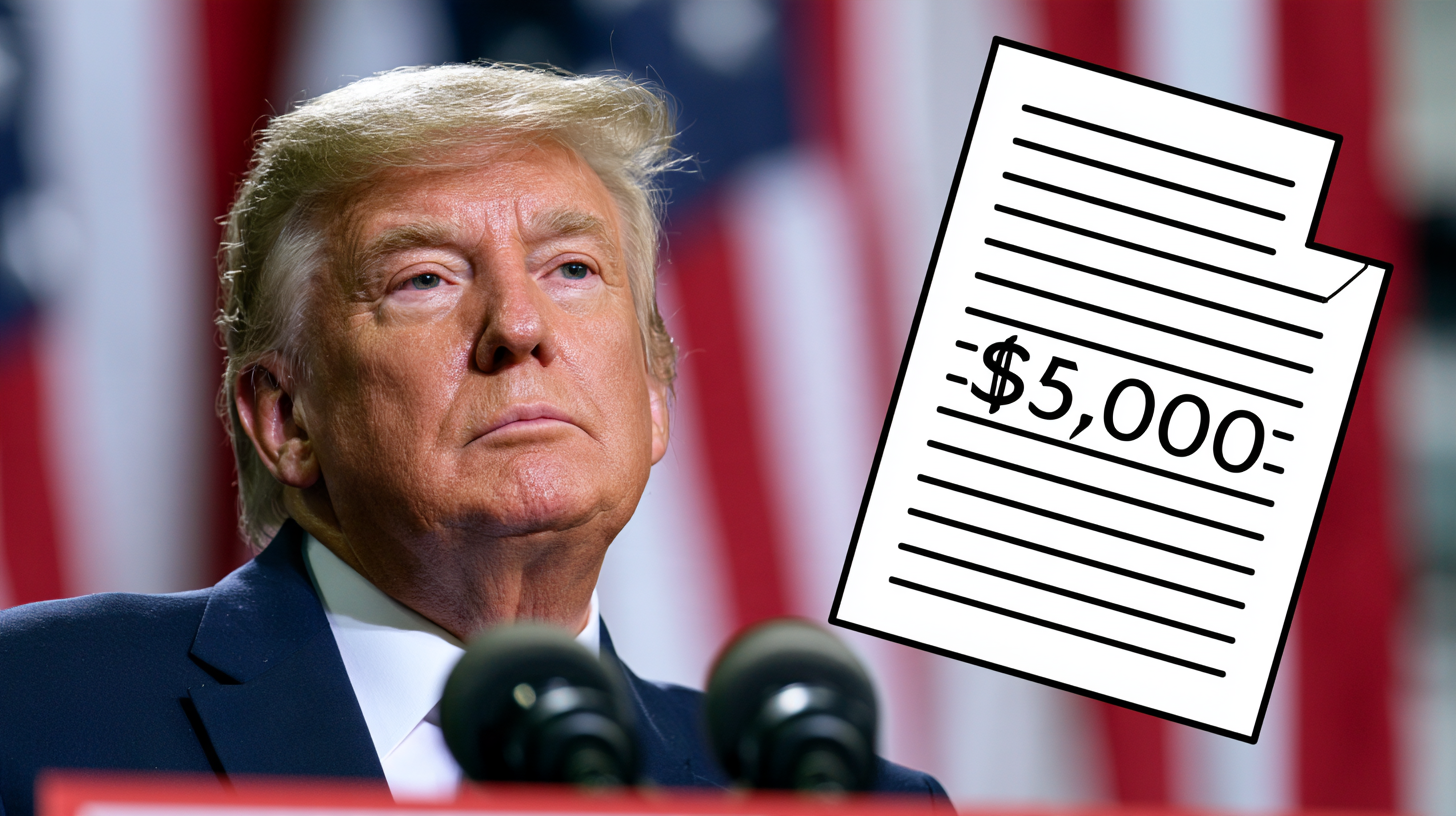
Trump reportedly promised a $5,000 “Trump dividend” for American adults if Republicans keep Congress. The pledge raises unresolved questions about legality, funding, eligibility, and whether Congress would need to approve it.
Donald Trump’s reported promise of a $5,000 “Trump dividend” for American adults if Republicans keep control of Congress is drawing attention not only for its political appeal, but for the legal and fiscal questions it raises.
According to a CBC News record supplied for this report, Trump said on a Wednesday that he would pay every American adult a $5,000 U.S. “Trump dividend” if Republicans retain control of Congress in November’s midterm elections.
The reported pledge, if confirmed in full, would sit at the intersection of campaign rhetoric, federal spending authority, and election-law scrutiny. A candidate or president can generally campaign on future policy proposals, including tax rebates, stimulus checks, or dividend-style payments. But a promise framed as money tied to an election outcome can also raise questions about whether voters may understand it as an inducement connected to political support.
At this stage, important details remain unverified in the available source material, including the exact wording, the event where the statement was made, the date, the audience, and whether Trump or his campaign provided any formal funding plan.
The available research states that Trump promised a $5,000 payment to “every American adult” if Republicans keep Congress in the midterm elections. The proposal has been described as a “Trump dividend.”
However, the original video, transcript, or official campaign statement was not included in the supplied materials. That matters because the legal and political meaning of the remark could depend heavily on the exact words used.
For example, there is a meaningful difference between saying a future administration would pursue legislation to create a broad payment program and saying voters will receive money if a particular party wins. The first is a conventional campaign promise. The second may invite closer scrutiny because it sounds more directly linked to an electoral outcome.
The available record does not establish whether Trump described the payment as a policy goal, a campaign pledge, a guaranteed payment, or a conditional reward.
The reported phrase “every American adult” leaves several major eligibility questions unanswered.
It is not clear whether the proposed Trump dividend would apply to:
– U.S. citizens only, or all legal adult residents;
– adults above a specific age threshold;
– taxpayers, workers, or all adults regardless of income;
– people living abroad;
– incarcerated individuals;
– high-income households or only lower- and middle-income households.
Past federal payment programs have required detailed rules on eligibility, income limits, tax filing status, dependent status, and distribution methods. None of those details are confirmed in the supplied record.
Without those rules, the proposal cannot be evaluated as a fully formed federal spending plan.
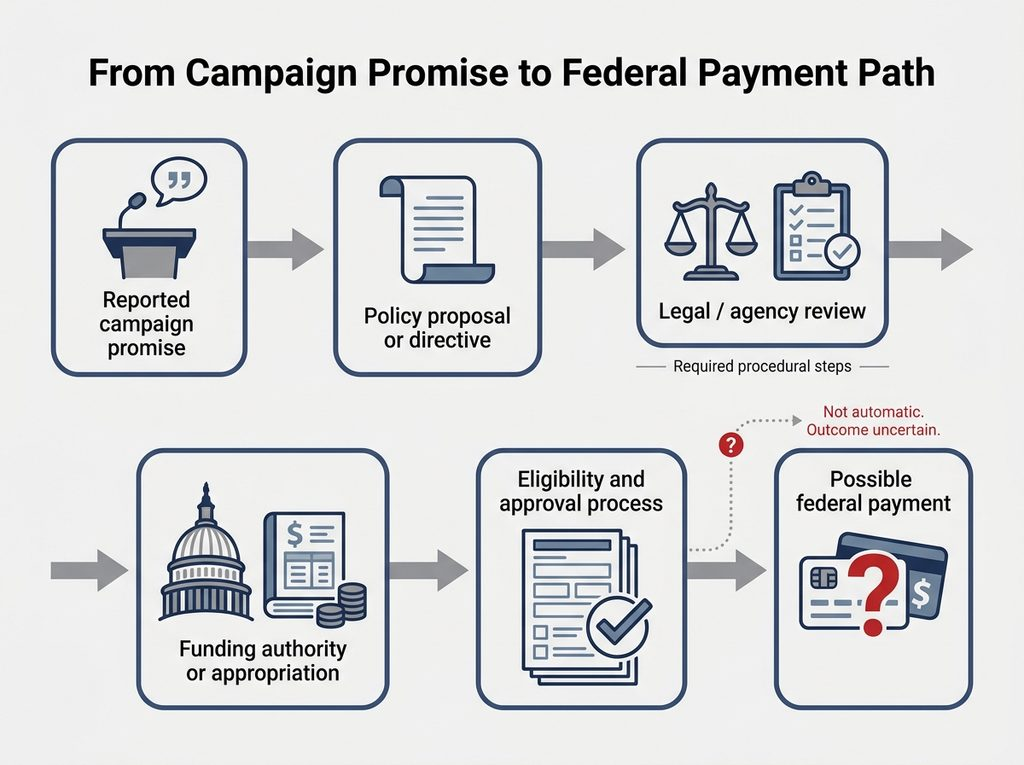
Even if Trump were elected or serving as president at the time of the proposal, a universal $5,000 payment to American adults would almost certainly require congressional action.
The federal government cannot simply distribute a new nationwide cash payment because a president announces it at a political event. Congress controls federal spending and would need to authorize and appropriate the money through legislation.
That means the proposal would likely require support from the Republican-controlled Congress referenced in the reported pledge. It could also require decisions about whether the payment would be structured as a tax rebate, direct benefit, refund, credit, or some other federal program.
That legislative reality is central to understanding the claim. A campaign promise can describe what a candidate wants Congress to do. It cannot, by itself, create a legal right to receive a federal payment.
A $5,000 payment to every American adult would carry a very large federal price tag. The total cost would depend on the number of eligible adults and the final eligibility rules.
The basic formula is straightforward:
But because the available research did not include verified current adult population data or eligibility criteria, this report does not provide a final cost estimate.
Any credible fiscal analysis would need current Census population data, a definition of “American adult,” administrative cost assumptions, and an identified funding mechanism. It would also need to explain whether the payment would be financed through new borrowing, reallocated spending, tariff revenue, tax changes, or another source.
Without that, the Trump $5,000 payment remains a political pledge rather than a budgeted federal proposal.
The most sensitive issue is not only the size of the payment. It is the way the promise is reportedly tied to Republicans keeping Congress.
Campaigns routinely promise public benefits: tax cuts, child credits, student-loan relief, stimulus payments, Social Security changes, and health-care subsidies. Those are generally treated as policy commitments offered to the electorate.
Vote buying, by contrast, involves offering something of value in exchange for an individual’s vote or voting behavior. The available record does not establish that Trump made such an offer, and this article does not conclude that the reported statement was unlawful.
The question is whether the reported wording could blur the line between a permissible campaign promise and a payment framed as dependent on an electoral result. That distinction would require review of the full quote, context, audience, and any follow-up explanation from the campaign.
If the promise was framed as “Republicans will pass this policy if voters elect them,” it would more closely resemble ordinary campaign advocacy. If it was framed as a direct payment conditioned on voters producing a specific outcome, it could raise sharper election-law concerns.
Several key facts should be confirmed before treating the reported Trump dividend as a concrete proposal:
– The original video or transcript of Trump’s remarks;
– The exact date, location, and audience;
– The exact wording of the $5,000 promise;
– Whether the Trump campaign has issued a formal policy document;
– Who would qualify as an “American adult”;
– Whether Congress would be asked to authorize the payment;
– How the payment would be funded;
– Whether election-law experts view the wording as legally significant.
Until those details are available, the safest reading is that Trump reportedly floated a major campaign promise with unresolved legal, fiscal, and procedural questions.
The reported $5,000 Trump dividend is politically powerful because it is simple, direct, and easy for voters to understand. But the promise is not the same thing as an enacted federal payment program.
For the money to reach American adults, Congress would likely need to pass legislation, lawmakers would need to fund it, federal agencies would need to administer it, and eligibility rules would need to be written. The election-law debate depends on the exact language Trump used and whether the pledge was framed as a normal policy promise or as a benefit tied too closely to electoral support.
For now, the claim should be treated as a developing political story, not a guaranteed payment.
Read more as additional verification, campaign clarification, and legal analysis become available.