


Newsletter Subscribe
Enter your email address below and subscribe to our newsletter

Ideas Worth Building

A reported Bill Gates AI warning about catastrophic harm from artificial intelligence is drawing attention, but the alleged “billion deaths” figure needs primary-source verification and context before being treated as a forecast.
A reported Bill Gates AI warning is drawing attention because it combines three high-impact ingredients: a famous technology figure, artificial intelligence, and a catastrophic casualty figure.
According to a YourNews item, Gates allegedly said that artificial intelligence in malicious hands could enable an event causing as many as “a billion deaths” and argued that voluntary industry safeguards are not enough. That is an extraordinary claim — and it should be handled carefully.
The most important caveat is that the original interview, transcript, video, or full remarks were not included in the research material available for this article. Without that primary source, the exact wording and context of Gates’ reported comments cannot be independently confirmed here. That matters because there is a major difference between a public figure making a firm prediction, describing a hypothetical worst-case scenario, or using an extreme example to argue for stronger AI safety rules.
The available source attributes two broad points to Gate
– AI could be dangerous if controlled or exploited by malicious actors.
– Voluntary AI safeguards may be insufficient, making mandatory safeguards and government oversight necessary.
Those ideas fit within a wider debate about AI governance, AI regulation, and whether companies should be trusted to police themselves as increasingly capable systems are developed and deployed.
But the “billion deaths” figure should not be treated as an established forecast unless the original source confirms Gates said it in that way and meant it as a prediction. Catastrophic-risk language is often used in policy debates to describe low-probability, high-impact scenarios. It is not the same thing as evidence that such an outcome is likely, imminent, or technically straightforward.
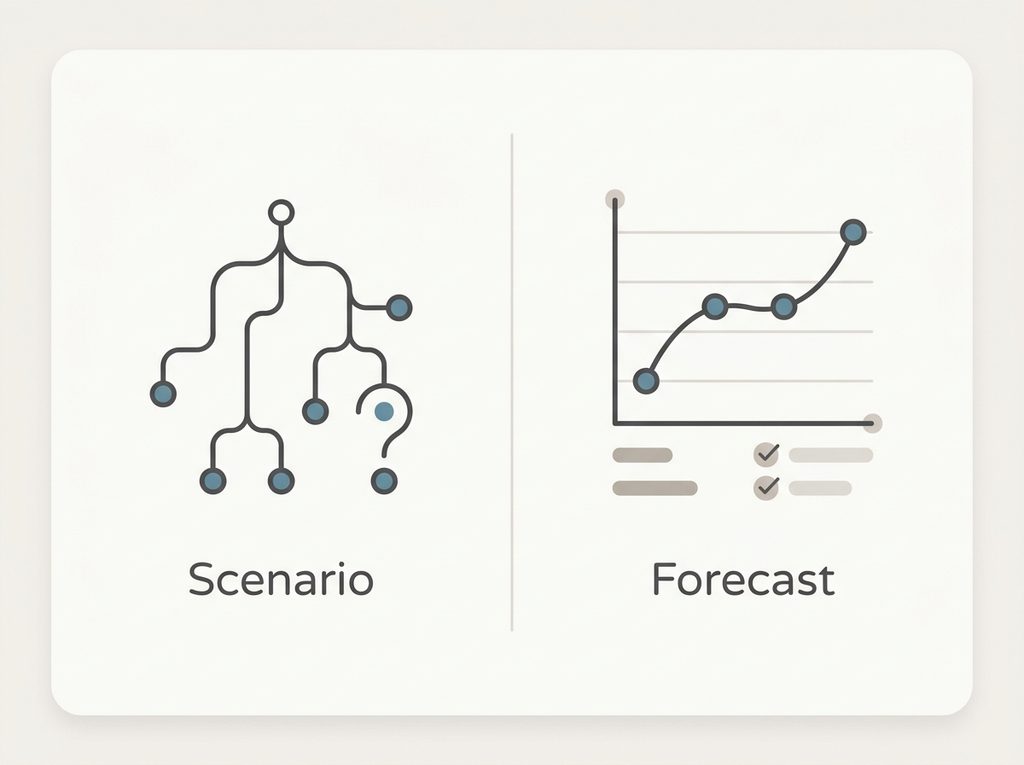
A hypothetical worst-case scenario asks what could happen if powerful technology is misused under extreme conditions. An evidence-based forecast estimates what is likely to happen based on data, technical capability, incentives, and real-world constraints.
The reported Gates claim, as currently available, appears closer to a catastrophic-risk argument than a confirmed forecast. In other words, the question is not simply “Will AI kill a billion people?” The more useful question is: “Could future AI capabilities make existing threats more dangerous, and what safeguards should be required before those systems become more powerful?”
That distinction matters for consumers. Sensational headlines can make AI risk sound either absurd or inevitable. Neither reaction is especially useful. Artificial intelligence already presents real risks, but those risks vary widely in evidence, timing, and severity.
The reported comments also raise a central policy question: should AI companies rely on voluntary AI safeguards, or should governments require specific safety measures?
Voluntary safeguards can include internal testing, model evaluations, usage policies, security controls, and commitments not to release certain capabilities without additional review. Supporters argue that companies have technical expertise and can move faster than regulators.
Critics argue that voluntary commitments are not enough because companies face competitive pressure to release products quickly. From that perspective, mandatory safeguards may be needed to create common rules across the industry, especially for systems that could be used in cyberattacks, biological research assistance, large-scale fraud, or automated manipulation.
Government oversight could involve auditing, reporting requirements, safety testing, liability rules, or limits on certain deployments. The hard part is designing AI regulation that reduces risk without freezing useful innovation or concentrating power among a small number of companies.
While existential risk receives headlines, many AI concerns are more immediate and measurable.
Consumers are already facing AI-related risks around fraud, impersonation, misinformation, privacy, bias, and automated decision-making. AI tools can make phishing messages more convincing, generate fake images or audio, accelerate spam, and help bad actors scale deception. In workplaces, AI can also affect hiring, monitoring, productivity expectations, and job disruption.
These issues do not require a “billion deaths” scenario to matter. They affect how people work, vote, bank, communicate, and protect their personal information.
That is one reason the policy debate should not be reduced to doom versus dismissal. AI safety includes both catastrophic-risk research and practical consumer protection. A responsible governance framework would need to address both.
AI safety experts, technologists, and policymakers disagree sharply about the scale and probability of catastrophic AI risk.
Some argue that increasingly capable AI systems could eventually create existential risk if they are misaligned, poorly controlled, or deliberately misused. Others warn that “AI doom” rhetoric can distract from current harms, inflate speculative scenarios, or justify rushed policy responses that are not well targeted.
Both perspectives can contain useful warnings. Catastrophic scenarios should not be accepted uncritically. But they also should not be dismissed solely because they sound extreme. The proper standard is evidence, context, and clear definitions.
For the reported Gates remark, that means readers should ask: What exactly was said? Was the casualty figure presented as a prediction, a possibility, or a policy illustration? What type of AI capability was being discussed? What safeguards were proposed? And what evidence was offered?

The reported Bill Gates AI warning is newsworthy because it highlights a real policy fight over artificial intelligence, AI safety, and whether voluntary industry promises are enough. But the most dramatic part of the report — the claim that AI in malicious hands could cause “a billion deaths” — requires primary-source verification before being treated as Gates’ confirmed position or as a credible forecast.
For now, the responsible interpretation is narrower: the report reflects growing concern that advanced AI could amplify serious harms if misused, and that mandatory safeguards may become a bigger part of AI governance debates.
Readers should treat the casualty figure with caution, focus on the policy substance, and look for the original transcript or recording before drawing firm conclusions.
Read more about AI regulation, government oversight, and the debate over mandatory safeguards as this story develops.