
Newsletter Subscribe
Enter your email address below and subscribe to our newsletter

Ideas Worth Building
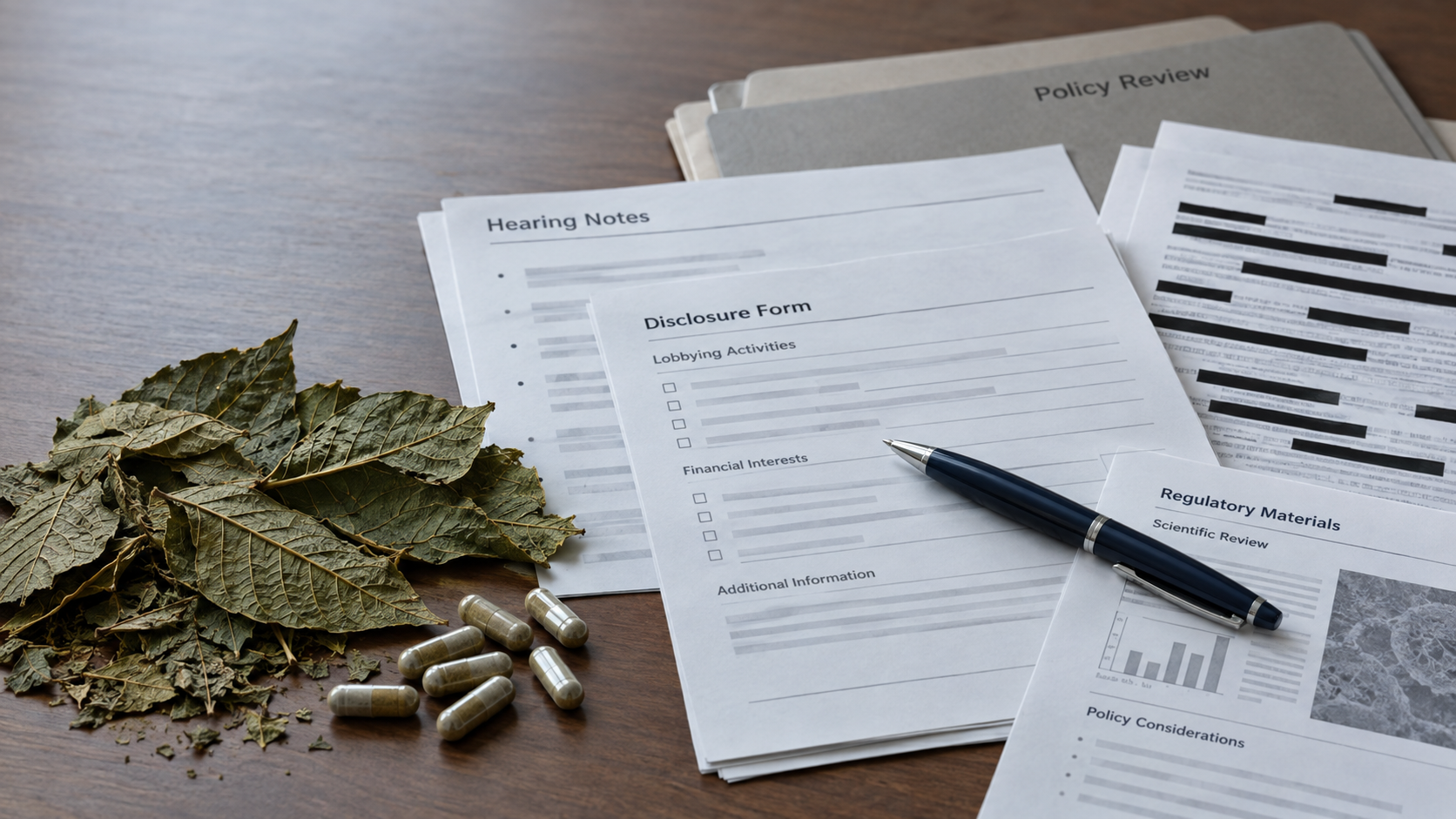
New national poison center findings show kratom-related calls rose roughly 65-fold over 13 years, while states with retail sales bans reported fewer severe outcomes. The data raises consumer safety and public health questions, but it does not prove bans directly caused the lower severe-case rates.
Kratom-related poison center reports rose sharply over a 13-year period, according to new national findings, adding fresh public health attention to a substance that is widely sold in some states and restricted in others.
The analysis found that kratom poison calls increased by roughly 6,500%, or about 65-fold, during the study period. It also reported that states with retail sales bans had lower rates of severe outcomes than states where kratom remained available through retail channels.
For consumers, the takeaway is not that every kratom product is equally risky or that poison center data captures every person who uses kratom. It does not. Poison center data reflects reported exposures — cases in which someone, a caregiver, a clinician, or another caller contacted a poison center for help or information. Still, a 65-fold rise in reports is large enough to matter for public health monitoring, especially when severe cases are involved.
Kratom is a plant-derived substance made from the leaves of *Mitragyna speciosa*, a tree native to Southeast Asia. In the U.S., it is commonly sold as powders, capsules, extracts, beverages, and other retail products.
People report using kratom for a range of reasons, including pain, mood, energy, or symptoms related to opioid withdrawal. Those reported uses do not mean kratom is proven safe or effective for those purposes. Federal health agencies, including the U.S. Food and Drug Administration and the National Institute on Drug Abuse, have continued to monitor kratom because its active compounds can affect opioid receptors and because adverse events have been reported.
That combination — consumer availability, psychoactive effects, and reports of toxicity — is why kratom exposure reports are watched closely by poison centers and public health researchers.
The new findings center on national poison center data and kratom exposure reports over 13 years. The headline result is striking: kratom poison calls rose roughly 65-fold.
The study also examined differences across states with different retail policies. States that banned retail sale of kratom reported fewer severe outcomes than states without retail bans.
That policy finding is important, but it should be read carefully. The data shows an association between retail ban states and lower severe-case rates. It does not prove that bans directly caused the lower rates. Other factors could also influence poison center cases, including public awareness, product availability through online sales, local enforcement, patterns of substance use, healthcare access, and whether people or clinicians choose to call a poison center.
In other words, the research adds evidence to the policy discussion, but it does not settle it.
Poison center cases are typically categorized by medical outcome. A severe case may involve serious symptoms, a need for hospital-level care, life-threatening effects, or death, depending on the specific coding and case details.
Kratom toxicity can be difficult to evaluate because exposure reports may involve kratom alone or kratom combined with other substances. Some consumers may also be using concentrated extracts or products with variable labeling, which can complicate dose awareness.
The practical point for consumers is simple: a poison center call is not the same thing as proof of poisoning in every case, and not every exposure is severe. But severe poison center cases are a warning signal because they represent situations where symptoms or clinical concern were serious enough to be documented through a public health reporting system.
State kratom laws vary widely. Some states restrict or ban kratom retail sale. Others allow sales, sometimes with age limits, labeling rules, or other consumer-protection requirements. In many areas, kratom may be available through smoke shops, convenience stores, specialty retailers, or online sellers.
Retail access may matter because availability can affect how easily consumers encounter a substance, how products are marketed, and whether high-potency or poorly labeled products reach people who may not understand the risks. Retail settings can also shape consumer perceptions: if a product is easy to buy, some people may assume it has been reviewed for safety in the same way as medications. That is not necessarily the case.
The new kratom poison center data suggests that states with retail bans had fewer severe outcomes, which may support further research into how retail access, product standards, labeling, and enforcement affect public health. But the findings should not be reduced to a simple claim that bans alone prevent harm.
Poison center data is valuable because it provides near-real-time insight into exposures that concern consumers, families, clinicians, and emergency responders. It can help identify emerging risks, changes in product use, and patterns of severe outcomes.
But it has limits.
Poison center data does not measure total kratom use in the population. It also does not capture every adverse event. Some people may never call a poison center. Some may seek emergency care directly. Others may have symptoms that go unreported.
The data also cannot always determine whether kratom alone caused a medical outcome, especially when other substances, underlying health conditions, or uncertain product contents are involved. That is why the retail-ban finding should be understood as a public health signal, not definitive proof of cause and effect.
For consumers, the findings reinforce several safety points:
– Kratom products can carry health risks, especially when combined with other substances or used in concentrated forms.
– Product labels may not always give a complete picture of potency, ingredients, or contamination risk.
– People with existing health conditions, substance use disorders, pregnancy, or use of prescription medications should be especially cautious and should seek medical guidance.
– If someone develops concerning symptoms after kratom use, contacting Poison Control or seeking urgent medical care is appropriate.
– State legality does not necessarily mean a product has been proven safe or effective.
The broader public health issue is not simply whether kratom is legal or illegal. It is how consumers can understand risk in a market where products, potency, regulation, and access can vary significantly by state.
The reported 65-fold rise in kratom poison calls is a notable public health signal. The finding that retail ban states reported fewer severe outcomes adds an important policy dimension, but it should be interpreted as an association rather than proof that bans directly caused better outcomes.
For readers, the most useful conclusion is measured: kratom exposure reports are increasing, severe cases do occur, and state regulation may influence public health patterns. More research is needed to clarify how product type, potency, retail access, and state rules affect risk.
**Read the Research** to review the study details, methods, and state-level findings behind the poison center analysis.